

Easy Miso Soup Recipe :The Best Way to Use Leftover Vegetables
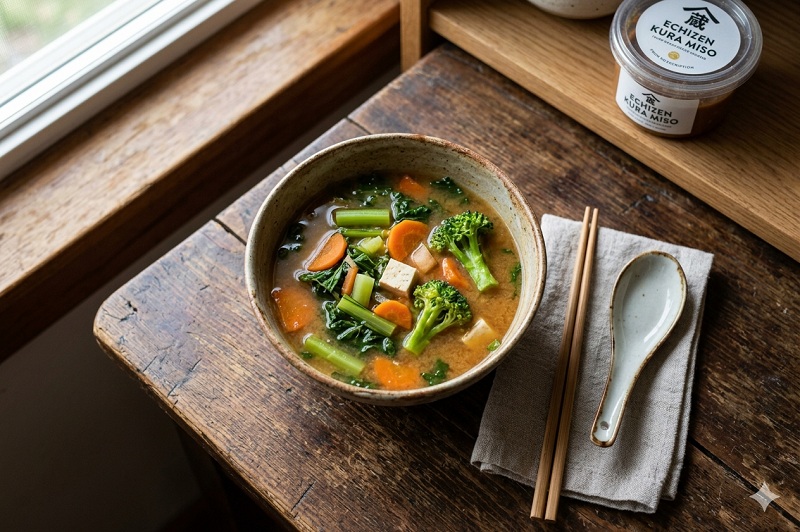
April in the UK often means unpredictable weather. On those chilling spring evenings, there is nothing more grounding than a warm bowl of soup. While you might only order it at a Japanese restaurant, you can make miso soup at home in minutes. It’s a versatile way to embrace a mindful, zero-waste lifestyle by using what you already have.
Is Miso Soup Healthy?
Absolutely. Miso is a fermented soy paste, meaning it is packed with plant protein and beneficial bacteria for gut health. The benefits of miso soup include supporting digestion and your immune system during seasonal changes. It’s the perfect answer to the question: is miso soup healthy?
How to make your Leftover Vegetable Miso Soup
Using miso is one of the smartest leftover vegetable ideas. This miso paste recipe creates a satisfying base that brings any mixture of veg together.
Ingredients
Echizen Kura Miso: A premium, aged miso paste with deep umami.
Leftover vegetables: Anything from your fridge such as carrots, broccoli, turnips, even kale stems and potatoes.
Dashi granules: Available at most Asian supermarkets. Simply ask the staff for "Dashi for miso soup."
Water
Instructions
Prep the Broth: Fill a pot with water and add the dashi granules according to the packet instructions to create your savory stock (Dashi).
Simmer: Chop your leftover vegetables into bite-sized pieces. Simmer them in the dashi broth until tender. This is a greatmiso soup recipe for using upleftover vegetables.
Turn Off Heat: This is crucial to preserve the live cultures in the miso. Turn off the heat once the vegetables are cooked.
Dissolve & Serve: Take a tablespoon of miso paste, dissolve it in a small amount of the warm broth, then stir it back into the pot.
Try this simple leftover vegetables soup tonight. It’s one of the most practical recipes for leftover vegetablesto add a touch of sustainable Zen to your routine.
CTA Discover the versatility of fermented wisdom.